The Allure of the Golden Coast
Imagine driving down the Pacific Coast Highway as the sun begins its slow descent toward the horizon. The air is salty, the light is a soft, buttery gold, and the sound of the crashing waves provides a rhythmic soundtrack to your journey. This isn’t just a scenic drive; it is the heartbeat of a lifestyle that has captured the world’s imagination for decades. California coastal luxury is more than just an architectural style; it is a philosophy of living that prioritizes light, air, and an unbreakable coection to the natural world.
In the world of high-end real estate, “Coastal Luxury” has evolved. It is no longer just about nautical stripes and seashell decor. Today, it represents a sophisticated blend of modern minimalism, organic textures, and effortless elegance. Whether it’s a glass-walled sanctuary perched on the cliffs of Malibu or a sprawling Spanish-inspired estate in Santa Barbara, the goal is always the same: to create a home that feels like an extension of the coastline itself.
The Core Philosophy: Blurring the Lines Between Indoors and Out
If there is one defining characteristic of California luxury design, it is the seamless transition between the interior and the exterior. In a climate where the weather is nearly perfect year-round, the walls of a home are often seen as mere suggestions rather than boundaries.
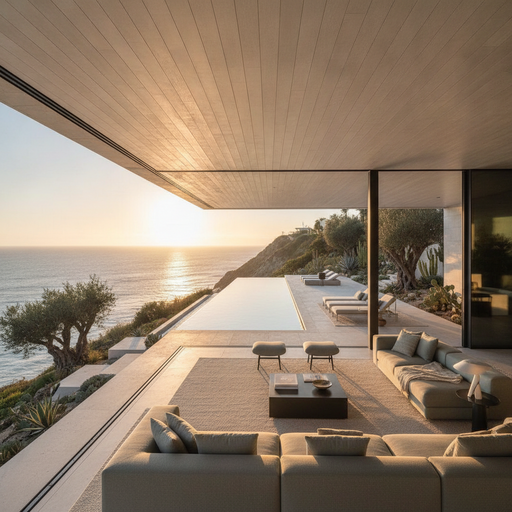
Architects achieving this look often utilize massive floor-to-ceiling glass pocket doors that slide completely out of sight, disappearing into the walls. This creates a “California Room”—an outdoor living space that features all the comforts of a living room, including fireplaces, plush sofas, and even media centers, but with the added benefit of ocean breezes. When you walk through one of these homes, you shouldn’t be able to tell exactly where the living room ends and the terrace begins. This opeess creates a sense of infinite space, making even a modest footprint feel like a grand estate.
A Palette Inspired by the Pacific
The color story of a luxury coastal home is dictated by the environment outside the window. Designers look to the sand, the surf, and the scrub brush of the California hills for inspiration. However, the modern interpretation of this palette is decidedly muted and sophisticated.
Instead of bright “navy” blues, we see deep indigos, misty grays, and soft teals. The foundation is almost always a crisp, warm white—think of the foam on a wave or a bleached piece of driftwood. This white acts as a canvas, reflecting the abundant natural light and making the space feel airy. Accents are brought in through earth tones: terracotta, sage green, and the golden hues of dried beach grass. These colors don’t compete with the view; they frame it, allowing the blue of the Pacific to be the true star of the show.
Materials That Tell a Story of the Earth
Luxury in California is often defined by the quality and “honesty” of materials. There is a move away from the shiny, artificial surfaces of the past toward materials that have a tactile, organic quality. In a coastal environment, materials must also be durable enough to withstand the salt air while still looking exquisite.
- White Oak: This is the gold standard for flooring in California coastal homes. Its light, neutral tone and tight grain provide warmth without feeling heavy.
- Limestone and Travertine: Used for everything from kitchen islands to outdoor patios, these natural stones feel cool underfoot and age beautifully.
- Linen and Wool: For upholstery and window treatments, natural fibers are essential. They breathe well and provide a soft, “lived-in” luxury that is central to the coastal aesthetic.
- Reclaimed Wood: Whether used for ceiling beams or a custom dining table, reclaimed wood adds a sense of history and ruggedness that grounds the more modern elements of the design.
Architectural Silhouettes: Modernity Meets Heritage
While the internal philosophy remains consistent, the exterior architecture of California coastal homes can take several paths. Two of the most prominent are “Modern Minimalist” and “Contemporary Spanish Revival.”
The Modern Minimalist approach focuses on clean lines, flat roofs, and steel frames. These homes are often “jewel boxes” of glass and concrete, designed to minimize visual distraction and maximize the panoramic views. On the other hand, the Contemporary Spanish Revival pays homage to California’s history. These homes feature white stucco walls, red clay tile roofs, and arched doorways. Inside, however, they are completely modernized with open floor plans and high-end finishes, offering a romantic, old-world charm that feels perfectly at home ieighborhoods like Montecito or La Jolla.
The Art of “Quiet Luxury” in Interior Curation
In a luxury coastal home, less is almost always more. This is the embodiment of “Quiet Luxury”—the idea that true wealth doesn’t need to shout. The furniture is chosen for its craftsmanship and comfort rather than for its brand name or flashy appearance.
Curating these spaces involves mixing high-end custom pieces with organic “found” objects. A hand-carved stone bowl from a local artisan might sit atop a minimalist Italian marble coffee table. The art on the walls is often oversized and abstract, mimicking the vastness of the ocean. Lighting is also a crucial element; oversized woven pendants or sculptural brass fixtures serve as functional art, providing a soft glow that mimics the “golden hour” light even after the sun has set.
Sustainability: Designing for the Future
Modern California luxury is increasingly synonymous with sustainability. High-end homeowners are no longer just looking for beauty; they are looking for responsibility. This means incorporating smart home technology that manages energy consumption, installing high-efficiency solar panels that are integrated into the roof design, and using drought-tolerant native landscaping.
The “coastal” aspect of the design also means being mindful of water. Many luxury homes now feature advanced greywater recycling systems to maintain lush gardens without wasting precious resources. Using locally sourced stone and timber not only reduces the carbon footprint but also ensures that the home feels deeply coected to its specific geographic location.
The Outdoor Sanctuary: More Than Just a Pool
In California coastal design, the backyard is treated with the same level of detail as the master suite. It is a multi-functional sanctuary designed for both high-end entertaining and quiet reflection. The “Infinity Edge” pool is a staple, designed so that the water appears to flow directly into the ocean.
Beyond the pool, you will find sunken fire pits surrounded by built-in stone seating, professional-grade outdoor kitchens with pizza ovens and wine fridges, and “wellness zones” featuring outdoor showers and cedar saunas. Landscaping is intentional, using sculptural succulents, olive trees, and lavender to create a sensory experience that smells as good as it looks. The goal is to create a private resort experience where you never feel the need to leave home to find tranquility.
Conclusion: A Legacy of Light and Space
Designing a California coastal luxury home is an exercise in restraint and appreciation. It is about understanding that the most expensive “amenity” a home can have is a coection to nature. By focusing oatural light, organic materials, and a seamless flow between the indoors and outdoors, these homes provide a sanctuary from the fast-paced world outside.
Whether you are building your dream home from the ground up or simply looking to bring a touch of the Pacific into your current space, the principles of California design remain the same: Keep it light, keep it natural, and always leave room for the breeze to come in. In the end, a luxury home isn’t just about the price tag; it’s about how it makes you feel when you walk through the door and see the sun reflecting off the water.

