The Hidden Potential of the Ranch-Style Home
There is something inherently nostalgic and comforting about a ranch-style home. Known for their long, low profiles and open-concept layouts, these single-story gems were the epitome of the mid-century American dream. But for many homeowners today, the traditional ranch can sometimes feel a bit discoected from the very thing it was designed to celebrate: the great outdoors. If you look out your back window and see nothing but a patch of grass and a concrete slab, you are sitting on a goldmine of untapped potential.
Designing a patio for a ranch home isn’t just about adding a place to put a grill; it’s about extending your square footage and creating a seamless flow that makes your home feel twice as large. Because ranch homes are built close to the ground, they offer a unique advantage—there are no steep stairs or awkward balconies to navigate. You have the perfect canvas for a “walk-out” lifestyle where the transition from your living room to your lounge chair is completely effortless. Let’s dive into how you can transform your ranch backyard into a breathtaking outdoor sanctuary.
Embracing the Seamless Indoor-Outdoor Flow
The hallmark of a successful ranch home patio design is continuity. When you stand in your kitchen or living room, the patio should feel like an “outdoor room” rather than a separate attachment. To achieve this, consider the levels of your flooring. If possible, try to keep the patio height as close to the interior floor level as the local building codes allow. This minimizes the psychological barrier between inside and outside.
Large sliding glass doors or even folding “accordion” style doors are the best friends of a ranch renovation. Imagine hosting a summer dier party where the doors are pushed completely aside, allowing guests to drift between the kitchen island and the outdoor dining table without ever feeling like they’ve “left the party.” This architectural harmony is what makes modern ranch designs so sought after.
Choosing the Right Materials for a Low-Profile Look
Since ranch homes emphasize horizontal lines, your choice of materials should complement that aesthetic. Natural stone like flagstone or slate works beautifully because it mimics the earthy, grounded feel of a single-story home. If you prefer a more modern look, large-format concrete pavers can provide a clean, minimalist grid that stretches the visual space of your backyard.
For those looking for a warmer touch, a low-profile wood deck made of cedar or composite material can bridge the gap between the house and the lawn. The key is to avoid high railings that might block your view of the rest of the yard. Instead, use wide steps or “wrap-around” stairs that serve as extra seating and keep the sightlines open and inviting.
Creating Functional Zones: More Than Just a Concrete Slab
One of the biggest mistakes people make with ranch patios is creating one giant, undifferentiated space. To make your backyard truly livable, you need to think in terms of “zones.” Just as your house has a kitchen, a dining room, and a den, your patio should have dedicated areas for different activities.
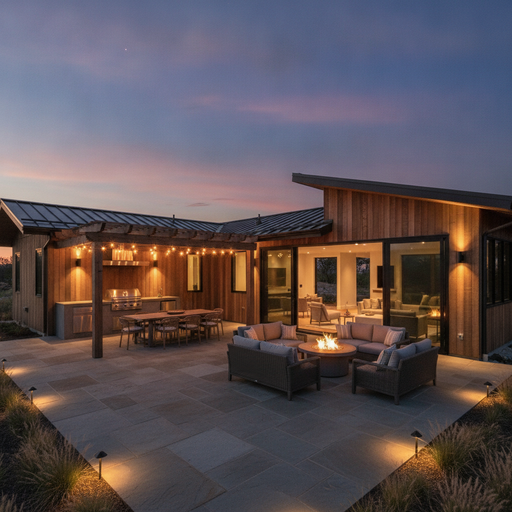
- The Gourmet Hub: Position your outdoor kitchen or grilling statioear the actual kitchen. This makes it easy to transport food and supplies back and forth. Consider adding a built-in bar counter so guests can chat with the “chef” while the burgers are on the grill.
- The Al Fresco Dining Room: Place a sturdy dining table under a pergola or a large umbrella. This defines the space as a place for shared meals and long conversations.
- The Conversation Pit: This is often the heart of the patio. Arrange comfortable, deep-seated outdoor sofas around a focal point, such as a fire pit or a water feature. This zone should be located further away from the house to create a sense of “getting away” without actually leaving your property.
The Power of Vertical Interest: Pergolas and Privacy
Because ranch homes are low to the ground, the backyard can sometimes feel a bit “flat.” Adding vertical elements is crucial for creating visual interest and a sense of enclosure. A custom pergola is a fantastic addition; it provides dappled shade during the day and a structure to hang string lights or climbing vines like wisteria or jasmine at night.
Privacy is another common concern for ranch owners, especially if your neighbors have two-story homes looking down into your yard. Instead of a cold, towering fence, consider “living walls” or strategic landscaping. Tall ornamental grasses, clumping bamboo, or a row of emerald green arborvitae can provide a lush, green screen that feels like a natural part of the garden rather than a barricade.
Lighting: Setting the Mood After Sunset
Your patio shouldn’t go dark the moment the sun sets. In fact, a well-lit ranch patio often looks even more magical at night. The goal is to avoid harsh floodlights and instead layer your lighting. Use “uplighting” in your trees and shrubs to create depth and drama in the garden. Path lights can guide guests safely through the space, while Edison-style string lights draped over the dining area provide a warm, festive glow.
If you have a fire feature—whether it’s a modern gas fire table or a rustic wood-burning pit—it will naturally become the evening’s centerpiece. There is something primal and relaxing about watching flames dance while the stars come out, and it’s the perfect way to extend your patio season into the cooler autumn months.
Integrating Greenery into the Hardscape
A great patio design shouldn’t look like a desert of stone. You want to soften the edges with plenty of plants. For a ranch home, “built-in” planters that match the material of the patio can create a very high-end, architectural look. Use a mix of textures—soft ferns, structural succulents, and colorful pereials—to keep the space feeling vibrant throughout the year.
If you have a smaller patio, container gardening is your best friend. Large, ceramic pots in varying heights can add pops of color and can be moved around depending on your needs. For a truly professional touch, consider “stepping stones” with ground cover like creeping thyme or moss growing between them. This blurs the line between the man-made patio and the natural world, which is the ultimate goal of ranch-style living.
Conclusion: Investing in Your Lifestyle
Redesigning your ranch home patio is about more than just resale value—though a beautiful outdoor space certainly adds plenty of that. It’s about creating a sanctuary where you can drink your morning coffee while listening to the birds, where you can host the people you love, and where you can decompress after a long day.
By focusing on the flow between your interior and exterior, choosing materials that complement your home’s low profile, and defining functional zones for relaxation and entertainment, you can turn a simple backyard into the most popular “room” in your house. Your ranch home was built for this; it’s time to step outside and enjoy it.

