Understanding Custom Home Exterior Materials Pricing: A Practical Guide
SUBMIT YOUR DETAILS FOR
Deciding on the exterior materials for your custom home is a big step. It’s about more than just looks; it shapes your home’s character, its long-term durability, and a large part of its overall value. Many people wonder about custom home exterior materials pricing, and it’s true that costs can vary widely. There’s no single price tag because so many elements come into play. This guide will walk you through the common factors that affect these prices and give you a clearer picture of what to expect when planning your project.
The journey to building or renovating a custom home exterior begins with understanding the different components and what makes their prices tick. From the foundation to the roof, every material choice has a cost attached, influenced by its type, quality, how hard it is to put in, and even where you live.
What Drives Exterior Material Costs?
Several key things influence the final bill for your custom home exterior. Knowing these helps you budget better and make smarter choices.
- Material Type: This is perhaps the biggest factor. A brick exterior will naturally cost more than vinyl siding. A metal roof will cost more upfront than asphalt shingles. Each material has its own price point, reflecting its raw cost, manufacturing process, and how long it lasts.
- Material Quality and Grade: Within each material type, there are different quality levels. For example, builder-grade vinyl siding is cheaper than premium, thicker vinyl. The same goes for windows, doors, and roofing. Higher quality often means better durability, energy efficiency, and a more refined appearance, but it comes with a higher price.
- Level of Customization: When you say "custom home," you’re often thinking of unique designs, special finishes, or non-standard sizes. These custom elements, while making your home truly yours, often add to the cost. Standard sizes and off-the-shelf options are usually more budget-friendly.
- Installation Complexity: Some materials are simply harder and take more time to install than others. Laying brick or stone veneer takes skilled labor and more hours than putting up siding panels. Intricate architectural details also increase labor time and thus, labor costs for exterior renovation.
- Regional Pricing Differences: Where your home is located plays a significant role. Material prices can vary from state to state, or even city to city, due to shipping costs, local demand, and the availability of certain materials. Labor rates also differ greatly across regions.
- Market Conditions: Like anything else, the cost of building materials can go up or down based on supply and demand, economic trends, and even global events.
Breaking Down Exterior Component Costs
Let’s look at the main parts of a home’s exterior and what you might expect to pay for different material options. Keep in mind these are general ranges, and actual prices will depend on the factors mentioned above.
Siding Costs
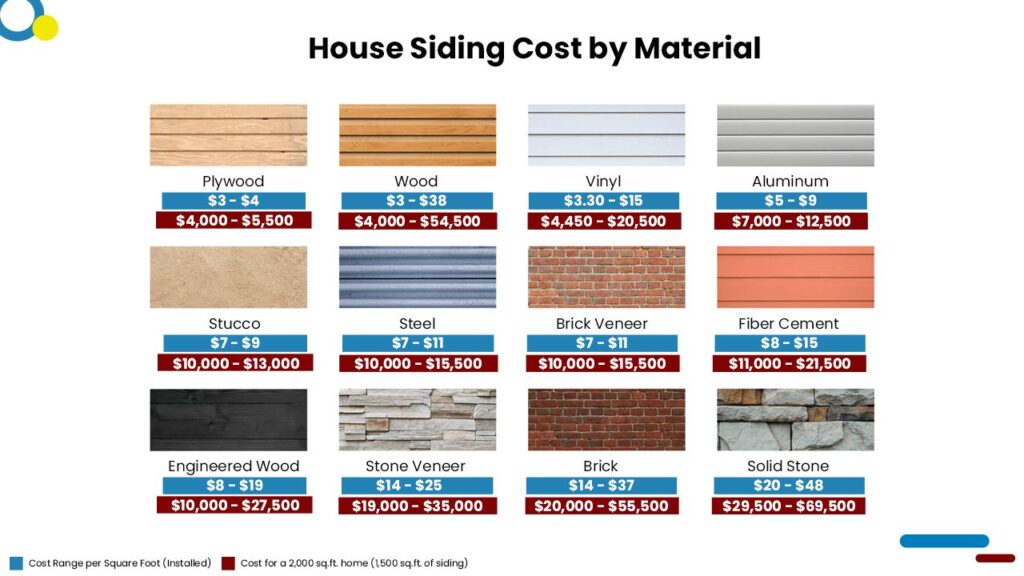
Siding is a huge part of your home’s appearance and protection. There are many options, each with its own cost and features.
- Vinyl Siding Cost: Often the most budget-friendly choice, vinyl siding is popular for its low maintenance exterior materials qualities and wide range of colors. You might pay anywhere from $3 to $8 per square foot installed. It’s a good option if you’re looking for a simple, cost-effective finish.
- Fiber Cement Siding Cost: Brands like HardiePlank are very popular. Fiber cement offers the look of wood, stucco, or masonry with excellent durability and fire resistance. It’s more expensive than vinyl, typically $6 to $15 per square foot installed, but it lasts a long time and needs less upkeep than real wood.
- Wood Siding Cost: Options like cedar shingles, clapboard, or log siding give a natural, classic look. Wood siding cost can range from $7 to $20 per square foot or more, depending on the wood type and finish. It requires regular maintenance, like painting or staining, which adds to long-term costs.
- Brick Veneer Cost: A timeless choice, brick offers incredible durability and a classic aesthetic. It’s a significant investment, often $10 to $25 per square foot installed. While the upfront brick veneer cost is higher, its longevity and very low maintenance often provide a good return on investment over decades.
- Stone Veneer Cost: Whether natural stone or manufactured stone veneer, this option gives a luxurious, sturdy appearance. Natural stone veneer is typically more expensive, from $20 to $50+ per square foot, while manufactured stone can be $10 to $35 per square foot installed. Both significantly boost curb appeal.
- Stucco Cost: Common in warmer climates, stucco offers a seamless, textured finish. Its cost usually falls between $7 and $15 per square foot installed. It’s durable and fire-resistant but requires skilled application to avoid cracks.
- Metal Siding Cost: Growing in popularity for modern designs, metal siding (steel or aluminum) is durable and low-maintenance. Costs vary greatly depending on the type and finish, from $8 to $30+ per square foot.
Roofing Costs
The roof protects your home from the elements and contributes significantly to its look.
- Asphalt Shingle Cost: The most common roofing material, asphalt shingles are affordable and come in many colors and styles. You can expect to pay $4 to $8 per square foot installed for standard architectural shingles. They typically last 20-30 years.