 11
11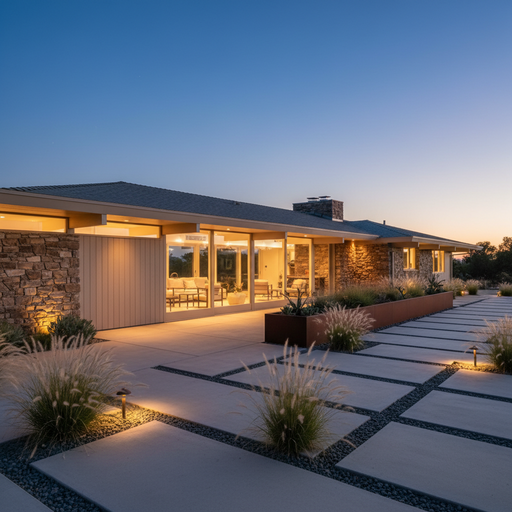
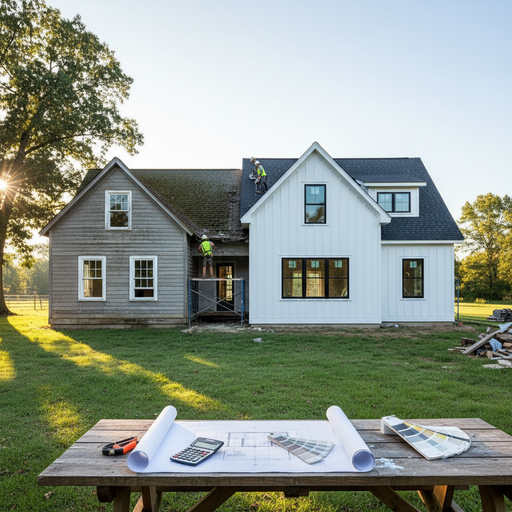
There is something inherently nostalgic about the American ranch house. Characterized by its long, low profile and sprawling footprint, the ranch-style home—or “rambler”—became the symbol of suburban bliss in the mid-20th century. However, as the decades have passed, many of these architectural gems have fallen into a bit of a “landscape rut.” You might find yourself looking at your home and seeing a sea of overgrown yew bushes, a cracked concrete driveway, and a lawn that feels more like a chore than a sanctuary.
The beauty of a ranch house lies in its simplicity. Because it sits low to the ground, it has a unique relationship with the earth that two-story homes often lack. It invites the outdoors in. Modern landscaping isn’t just about planting a few new flowers; it’s about honoring that horizontal silhouette while introducing clean lines, sustainable materials, and a sense of intentionality. Imagine walking up to your home and feeling a sense of calm as the geometry of your walkway perfectly mirrors the eaves of your roof. That is the power of modern ranch landscaping.
The first rule of modernizing a ranch landscape is to embrace geometry. Modern design thrives on structure. While traditional landscaping often uses curved, kidney-shaped garden beds, modern ranch landscaping leans into rectangles, squares, and long, straight lines that accentuate the house’s width.
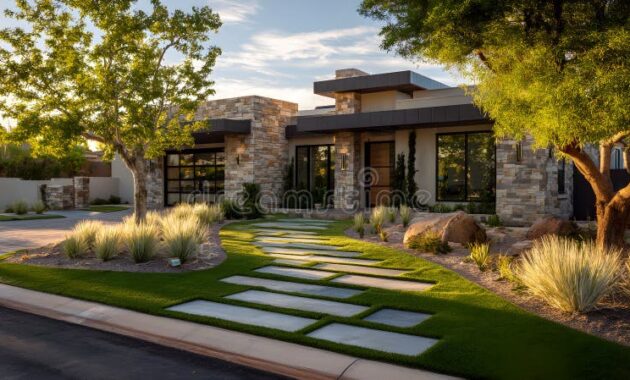
Consider the pathway leading to your front door. Instead of a narrow, poured-concrete sidewalk, imagine oversized rectangular pavers made of slate or smooth-cast concrete. By spacing these “floating” steps slightly apart and filling the gaps with dark Mexican beach pebbles or a low-growing groundcover like Scotch Moss, you create a rhythmic, architectural entrance. This approach breaks up the monotony of the ground plane and provides a visual “path” that guides the eye directly to your entryway, which is often a focal point in ranch architecture.
Hardscaping—the non-plant elements of your yard—acts as the bones of your design. For a modern ranch, think about using industrial or natural materials in a contemporary way. Weathered steel (Corten steel) planter boxes are a fantastic choice. Their rusted orange patina offers a stuing contrast against green foliage and gray siding. Use them to create varying heights, which adds much-needed vertical interest to a house that is primarily horizontal.
In the past, landscaping was often a competition of who could have the brightest, most varied flower beds. Modern landscaping takes a more disciplined approach, prioritizing texture, form, and shades of green over a chaotic explosion of color. This doesn’t mean your yard should be boring; rather, it should be sophisticated.
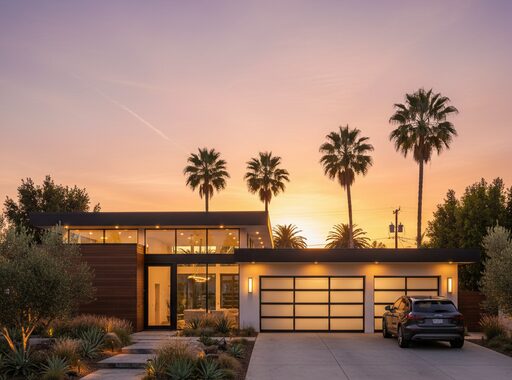
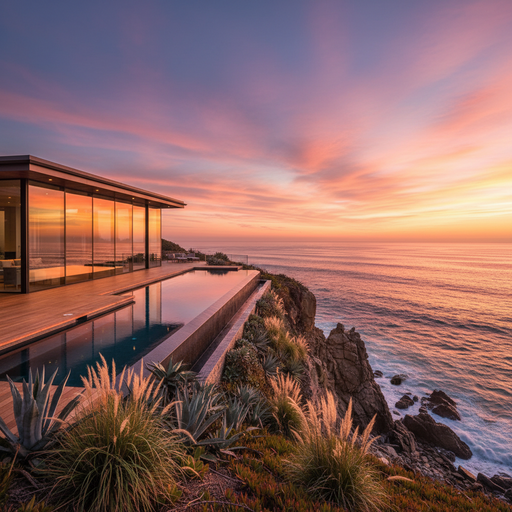
Ornamental grasses are the heroes of the modern ranch garden. Species like Mexican Feather Grass, Blue Oat Grass, or Karl Foerster Reed Grass provide movement. When the wind blows, these plants sway, adding a dynamic element to the static structure of the house. Their fine textures contrast beautifully against the broad, structural leaves of plants like Agave or the architectural “drills” of Yucca. By sticking to a palette of deep greens, silvery blues, and chartreuse, you create a cohesive look that feels like a curated gallery rather than a cluttered shop.
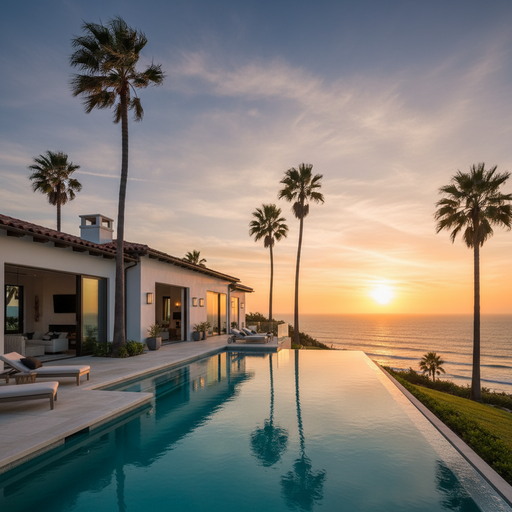
One of the core philosophies of the original ranch house was “indoor-outdoor living.” Large sliding glass doors were designed to make the backyard feel like an extension of the living room. Modern landscaping takes this a step further by creating functional “rooms” in the garden.
Instead of a tiny concrete slab for a patio, extend your living space with a large, ground-level deck made of Ipe wood or composite decking. Keep the deck at the same level as your interior floor to create a seamless transition. Define the “walls” of this outdoor room with tall privacy screens made of horizontal cedar slats or a row of columnar bamboo. Inside this space, a linear fire pit becomes the heartbeat of the home during the evening, echoing the long lines of the house itself.
If your ranch has mid-century modern bones, lean into it. Atomic-age influences like breeze blocks (decorative concrete blocks) can be used to build garden walls that provide privacy while still allowing air and light to pass through. These blocks create intricate shadow patterns that change throughout the day, adding an artistic layer to your landscape that pays homage to the home’s heritage.
Often overlooked, lighting is what transforms a modern landscape from “nice” to “spectacular” once the sun sets. Modern ranch houses often have large overhangs and deep eaves. Strategic lighting can highlight these architectural features while ensuring the safety of your pathways.
Avoid the “runway” look where path lights are lined up like soldiers. Instead, use “moonlighting” by placing fixtures high in trees to cast a soft, filtered glow downward. Use low-voltage LED spotlights to “uplight” your specimen trees or the texture of a stone wall. Under-bench lighting on your deck or hidden strips beneath the lip of your floating stairs adds a futuristic, high-end feel that makes the entire property glow with warmth.
The modern homeowner values time and the environment. A modern ranch landscape should be as sustainable as it is beautiful. This is where the concept of “Xeriscaping” comes in—using drought-tolerant plants that require minimal water once established.
By reducing the size of your traditional lawn and replacing it with permeable gravel gardens or native meadows, you significantly cut down on water usage and mowing time. Native plants are particularly important; they have evolved to thrive in your specific climate and provide essential habitats for local pollinators like bees and butterflies. A modern landscape isn’t just a pretty face; it’s a working ecosystem that supports the world around it.
Modernizing the landscaping of a ranch house is about more than just boosting property value; it’s about reclaiming the soul of the home. By focusing on clean lines, intentional hardscaping, and a sophisticated plant palette, you bridge the gap between the nostalgic past and the minimalist future. Your home isn’t just a building; it’s part of a landscape that should feel expansive, peaceful, and coected to the horizon.
Whether you are installing a new set of floating concrete steps or simply swapping out tired old shrubs for airy ornamental grasses, every change you make should serve the horizontal grace of the ranch style. So, step outside, look at your home with fresh eyes, and start sketching a vision that brings your ranch into the modern era. The potential is as wide as the house itself.